Before the consult
The case opens already assembled.
Chief complaint, history, vitals, red flags, prior plan, and reports sit in Clinical Synthesis before you start typing.
HPI readyVitals linkedReports attached
Live demo
See Co Doctor on one OPD case.
Start Treatment. Review the draft. Mark complete. Co Doctor handles Rx, tests, WhatsApp, reports, monitoring, EHR, and follow-up.
Meera Sharma - 39F
Today's Queue - OPD consultation
Clinical Synthesis
BP 126/82 - SpO2 98%
Fever + cough
None urgent
Diagnosis / Rx / Prognosis
URTI likely
Brand + dose pattern
CBC / CRP if needed
Expected course + red flags
Mark complete triggers
Mark completePrint Rx
EHR sync
Follow-up
Monitoring
Recovery brief
The doctor shift
Co Doctor is not another place to document. It prepares the case before the consultation, drafts the repeat clinical work for review, and keeps the after-visit work moving when you mark complete.
What changes in the room
Before the consult
Chief complaint, history, vitals, red flags, prior plan, and reports sit in Clinical Synthesis before you start typing.
During treatment
Select the likely diagnosis or order. Co Doctor drafts differential, prognosis, Rx, investigations, advice, and red flags in your style.
After mark complete
Print, WhatsApp, EHR sync, lab/pharmacy handoff, reminders, monitoring, and follow-up start from the doctor-approved plan.
Clinical Synthesis
Start Treatment
Treatment follow-up review with reports, vitals, prior medicines, and patient response already linked.
Draft quality
90%
repeat Rx target
Patient story
Headache worsening, follow-up review
Risk signal
Red flags and vitals surfaced first
Draft treatment
Usual brands, doses, tests, advice
Next step
Review timing, reminders, monitoring
The doctor can approve, edit, defer, or complete. The system prepares the work, it does not take over judgment.
Mark completeNo cold start
The next patient does not open as a blank record.
Review, not retype
Repeat OPD work starts close to your usual pattern.
Care continues
The patient stays connected after leaving the room.
Test it on repeat OPD cases: common diagnoses, brands, doses, investigations, advice, and follow-up decisions. If the draft still feels generic, it has not earned the doctor's trust.
How Co Doctor works
Step 1 - Gather
Everything the doctor needs to decide, in one view. No re-asking.
Fever 5 days, cough at night, self-medicated
BP 126/82 - HR 88 - SpO2 98%
CBC uploaded - X-ray pending
Complete clinic and hospital OPD management
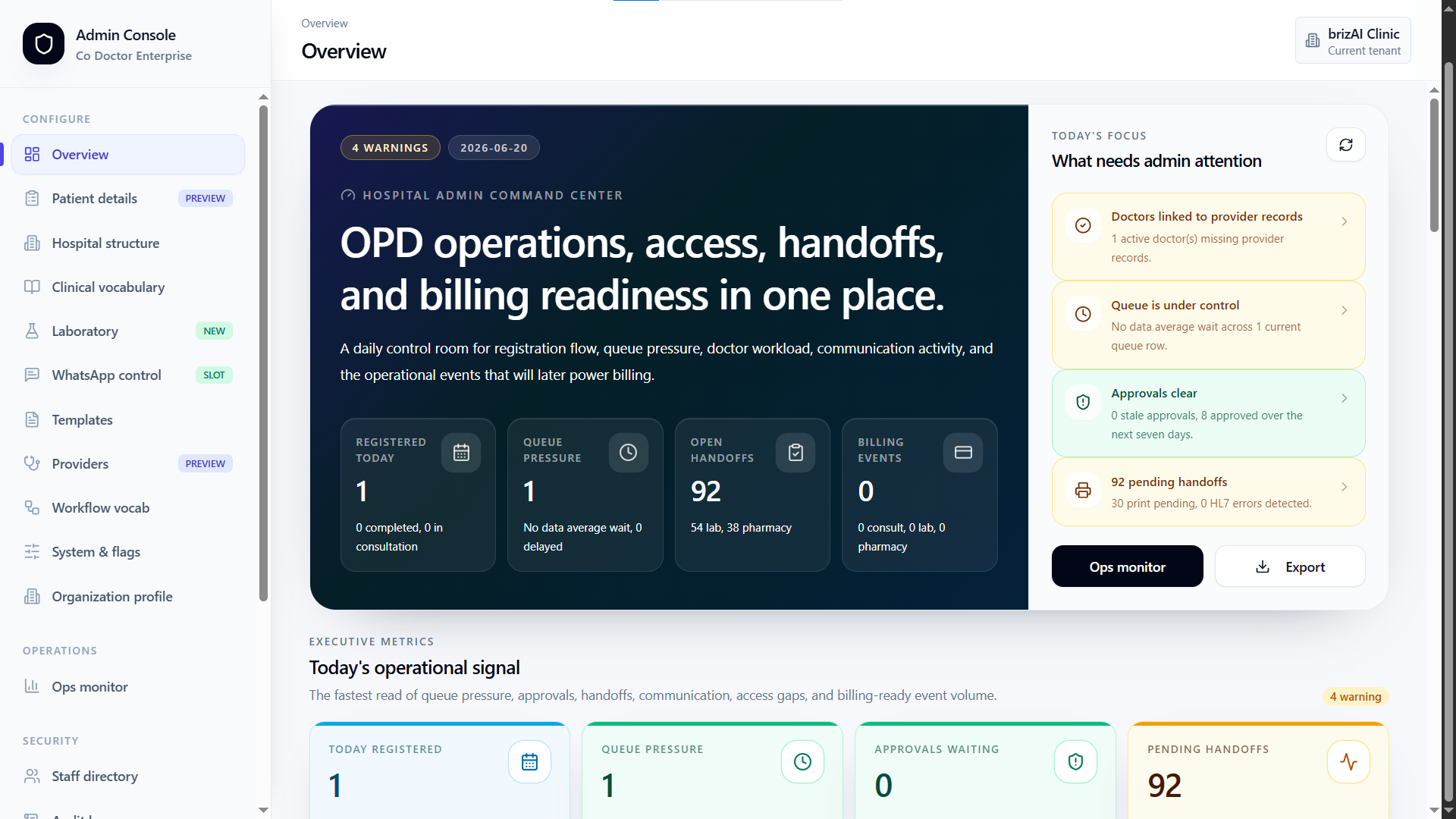
Run reception, nurses, doctors, lab, pharmacy, patient communication, follow-up, and admin control from one connected visit record.
Fewer operational leaks
Registration, vitals, consults, orders, reports, medicines, messages, and follow-up stay tied to one visit.
Clear ownership
Reception, nurse, doctor, lab, pharmacy, and patient-facing teams each see the next work they own.
Earlier intervention
Queue pressure, exceptions, workload, handoffs, and readiness issues surface before they become delays.
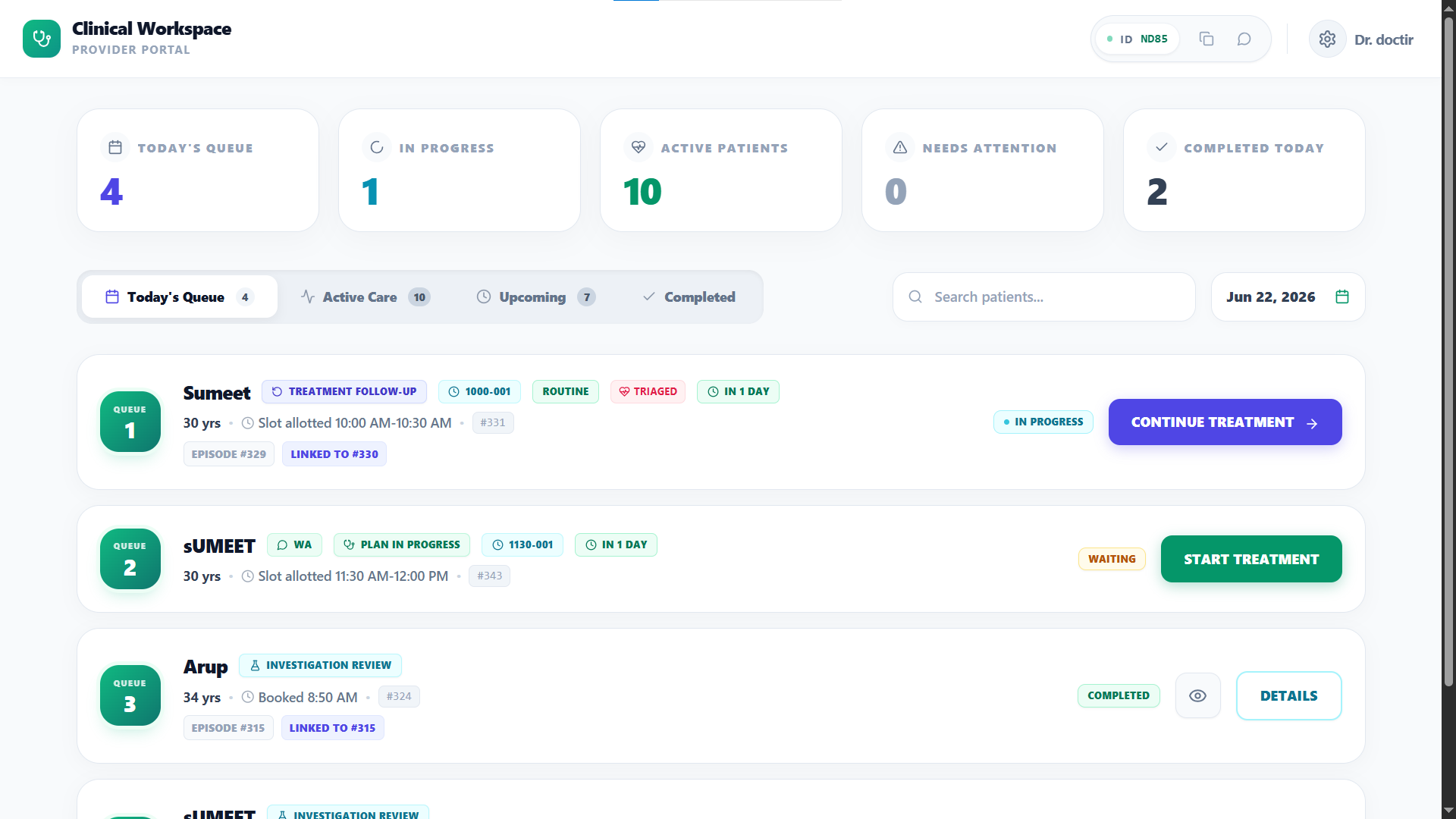
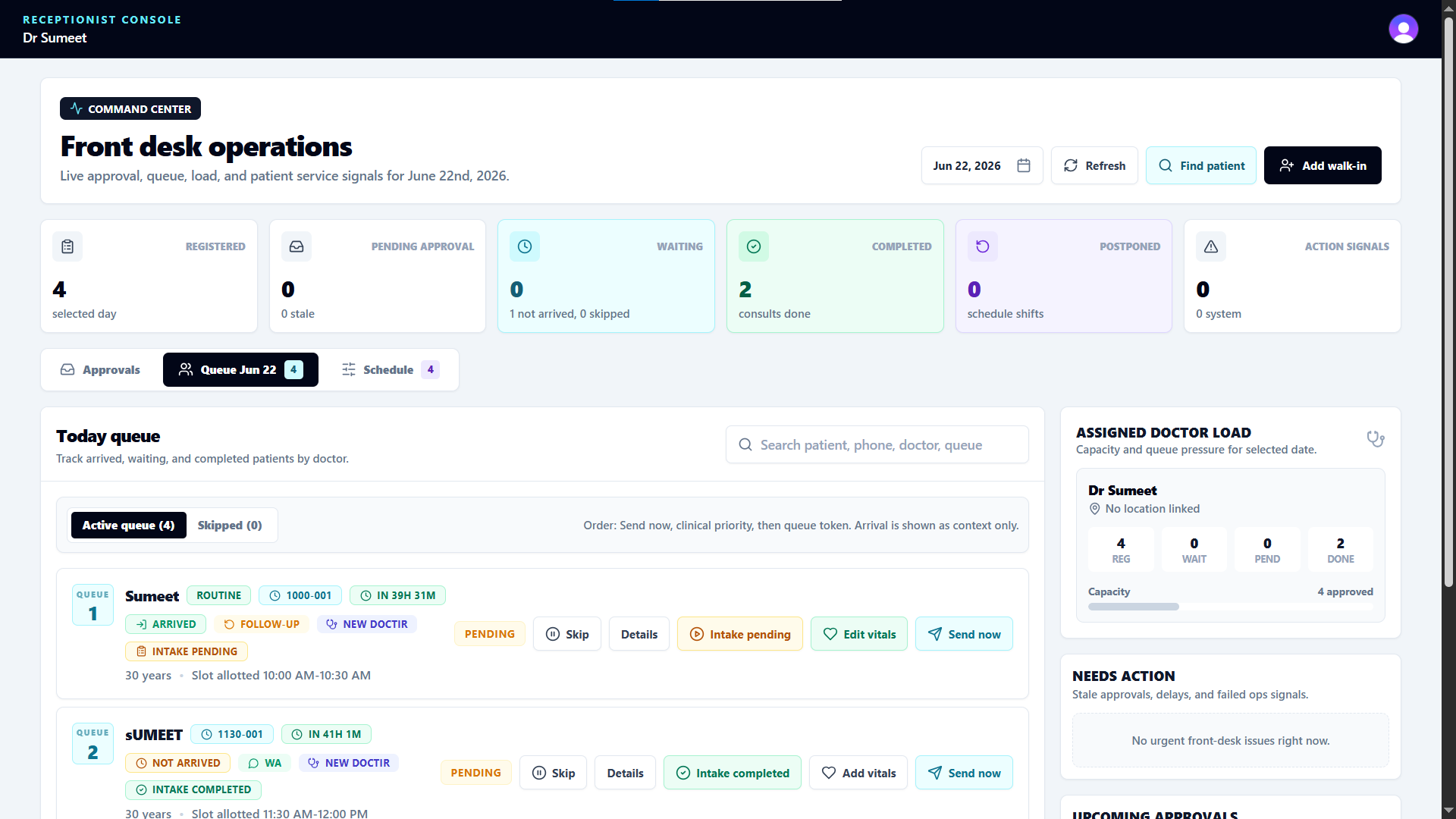
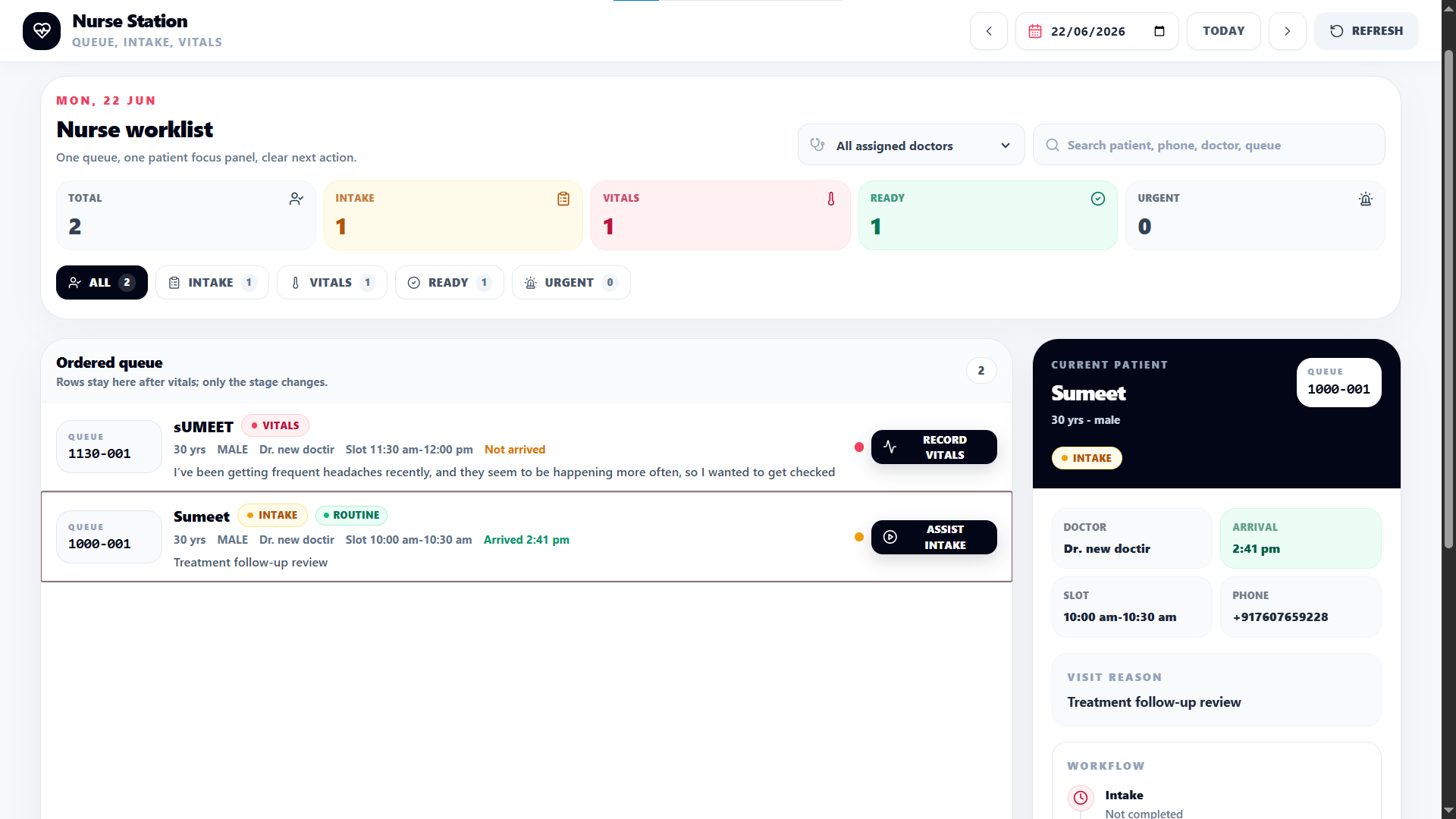
Real connected workspaces
Each workspace owns its part of the same OPD visit instead of creating another disconnected queue.
Operations control
Owned by Admin team
Set up staff, providers, roles, templates, integrations, feature flags, and audit control from one command layer.
Connected handoffs
Orders, medicines, instructions, exceptions, and follow-up do not sit in someone's memory. They move to the team console that owns the next action.
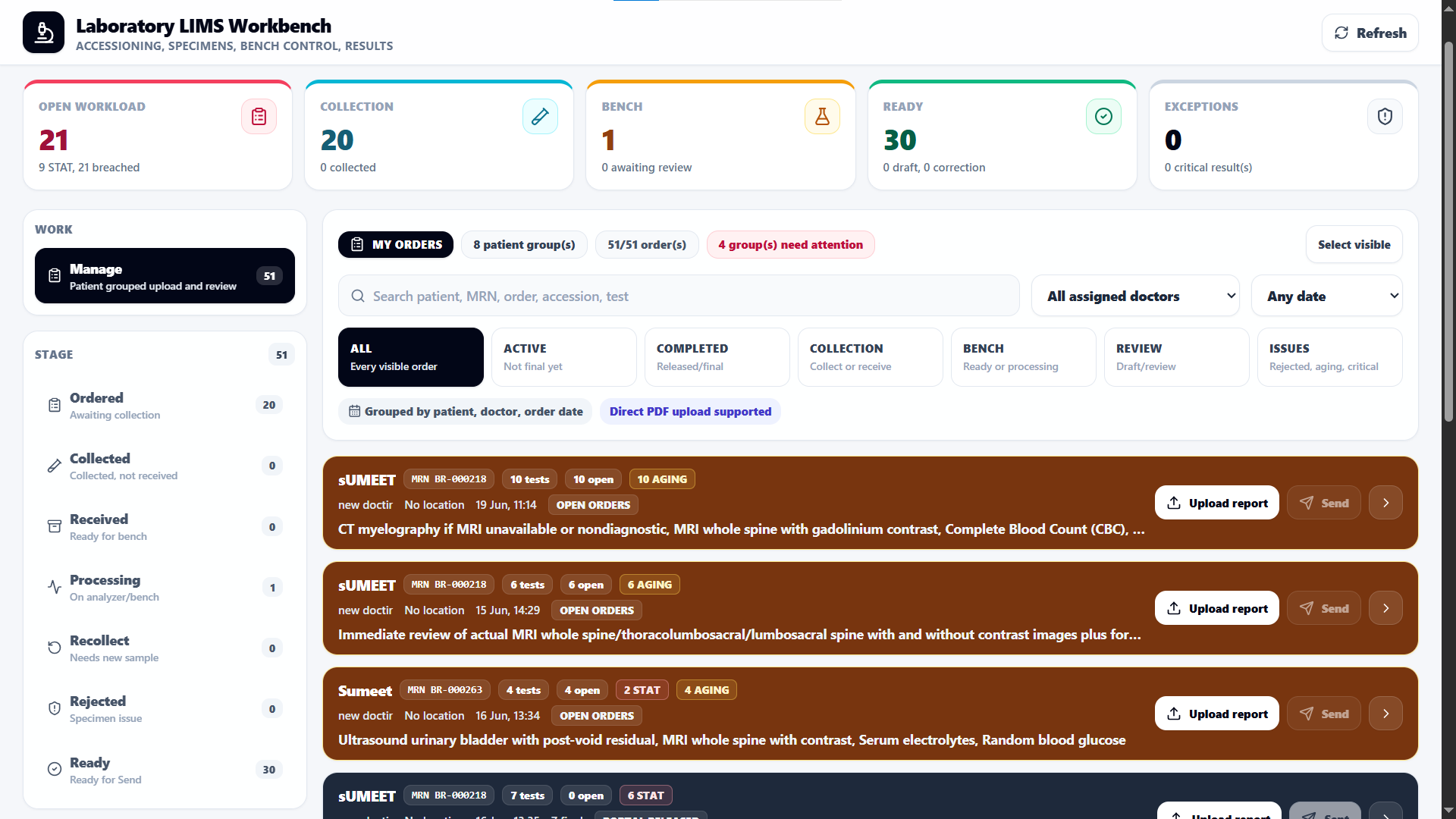
Lab receives the work, tracks collection and processing, then returns reports to the case.
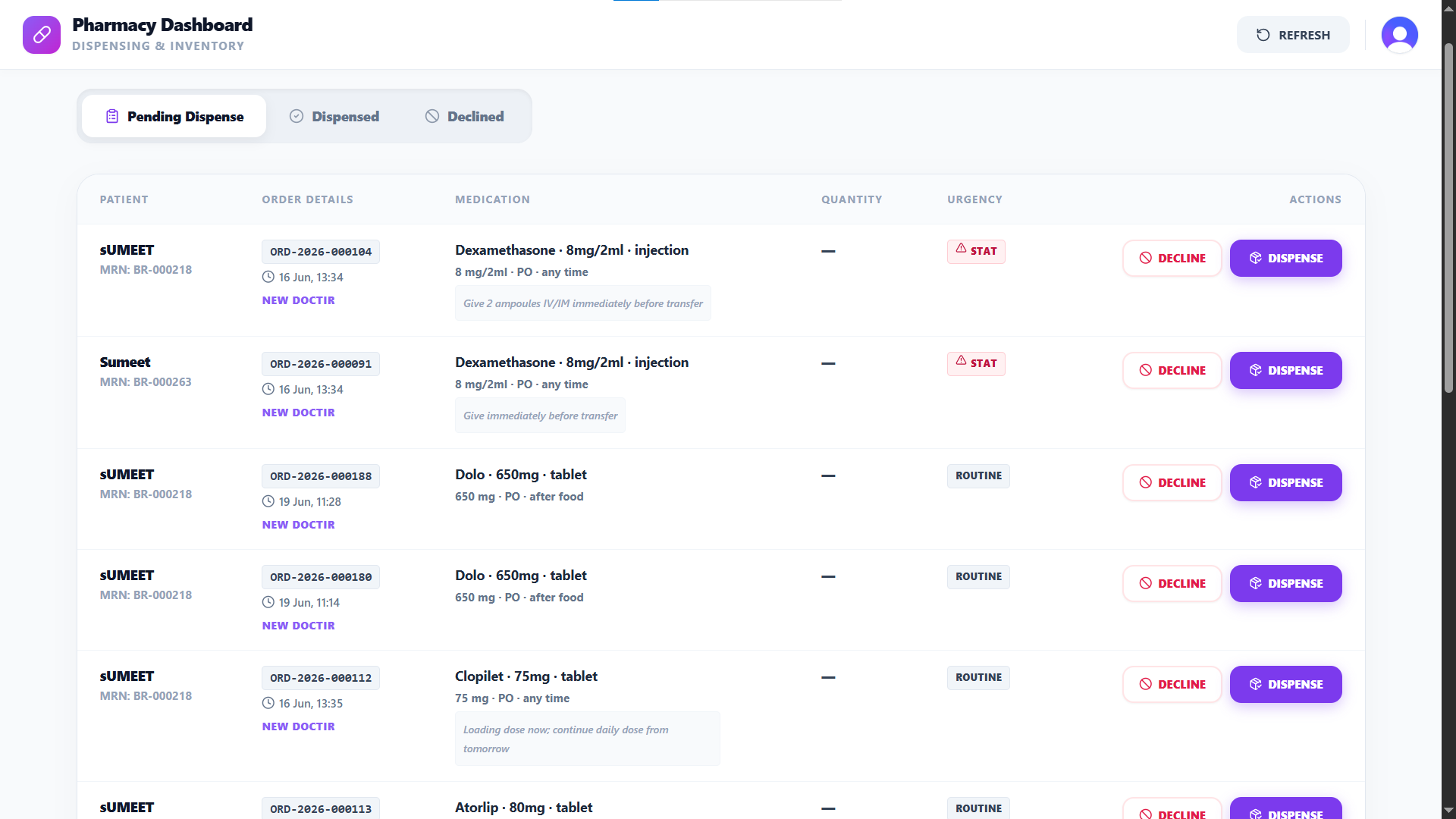
Pharmacy sees pending dispense, urgency, decline, and fulfilment status against the visit.
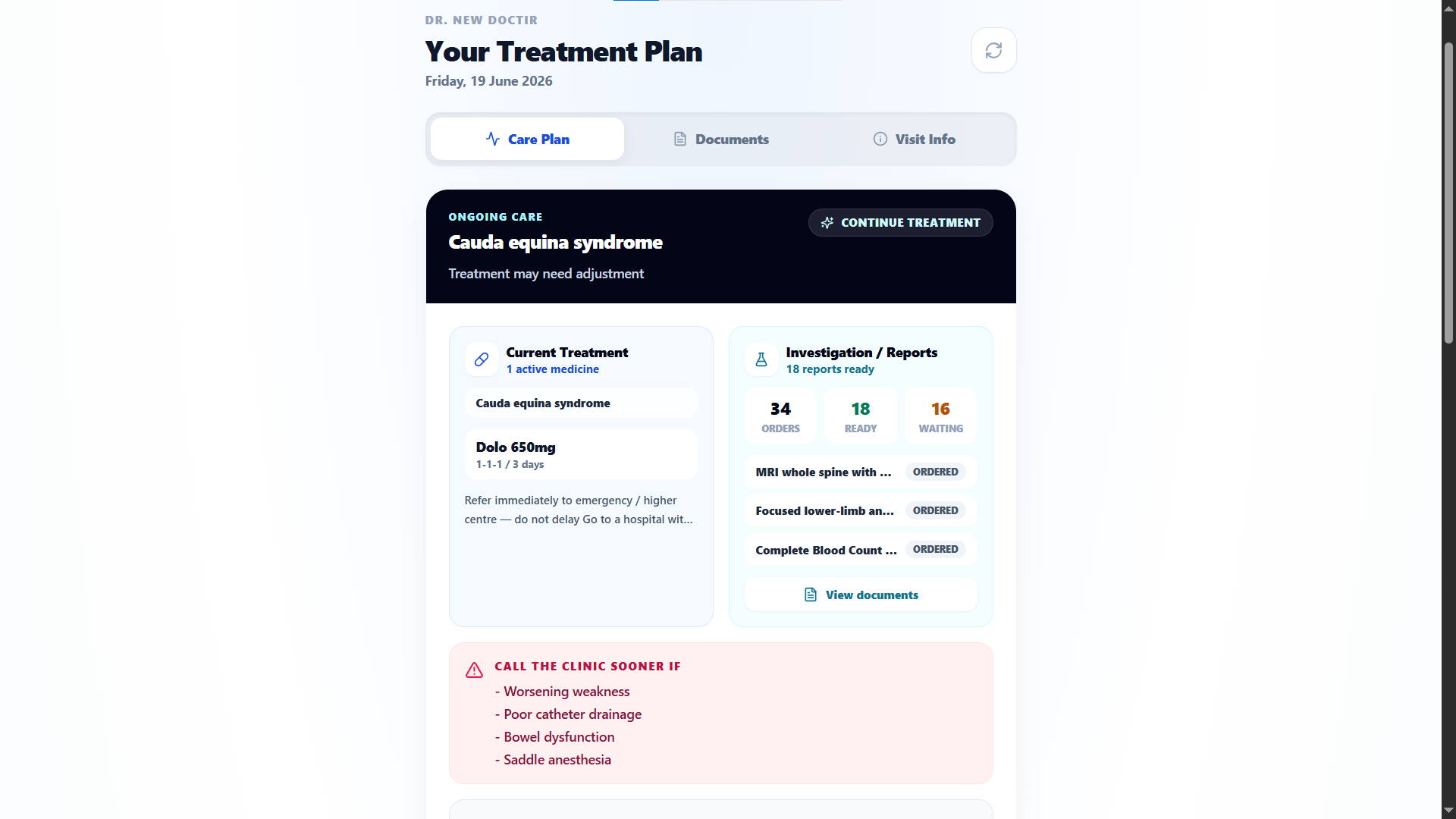
Instructions, reports, reminders, and follow-up access continue through the patient layer.
Admins can see stuck handoffs, workload pressure, approvals, and readiness gaps early.
Management capabilities
A clinic does not buy another screen. It buys fewer gaps between people, queues, orders, reports, medicines, messages, and follow-up.
Know who is booked, who arrived, who is waiting, who is done, and which doctor is under pressure.
Give doctors the visit story, investigation context, prior care, and next steps without starting cold.
Move intake, vitals, triage, reason for visit, and handoff notes into the doctor's case view.
Track orders from request to collection, processing, report upload, exception handling, and doctor review.
See pending dispense, urgent medicines, declined orders, and fulfilment status against the same visit.
Keep patients connected with no-login access to treatment plans, reports, instructions, reminders, and booking.
Control staff, providers, roles, templates, feature flags, integrations, and audit from one admin layer.
Spot queue pressure, stuck handoffs, exceptions, approvals, communication gaps, and readiness issues early.
Not another EMR
The buying test is simple: show your common OPD cases. If Co Doctor cannot remove most repetitive prescription work and follow-up chasing, it has not earned trust.
Typical EMR
Doctor types notes, searches medicines, repeats instructions, and staff chase follow-up.
Co Doctor
AI drafts diagnosis, prognosis, Rx, orders, advice, and follow-through for approval.
Select diagnosis or orders and Co Doctor prepares the likely Rx, tests, prognosis, advice, and red flags for review.
It learns brands, doses, frequencies, investigations, and edits from the doctor's own practice.
Nothing replaces judgment. The doctor approves, edits, defers, or completes the consultation.
Sales proof
90%
repeat Rx target
Bring repeat cases
Use your common OPD diagnoses, brands, doses, orders, and advice patterns.
Measure draft quality
Check whether diagnosis, prognosis, Rx, tests, red flags, and next step are ready for review.
Earn doctor trust
Target standard: 90% of repeat prescription work drafted before the doctor types.
AI personalization
Every approved prescription and order teaches Co Doctor your style. The next similar consult starts closer to how you work.
You prescribe
Your brand, dose, investigation, advice style.
Co Doctor learns
Only from YOUR practice. No cross-doctor sharing.
Next similar case
Rx, panels, and next steps ready before you type.
Privacy
Your data is never shared with other doctors or practices. Learning is strictly per-doctor, per-practice.
Consultation automation
One doctor-approved action can trigger print, WhatsApp, EHR sync, follow-up, monitoring, and review context.
Print Rx
Background print, no waiting
WhatsApp patient
Instructions + reminders sent
Sync EHR
Pushed to connected systems
Book follow-up
Scheduled before patient leaves
Monitor patient
Case-specific check-ins continue
Recovery summary
Reports and replies return to review
Why doctors switch
90%
target standard
Common diagnoses open with your likely brands, doses, investigations, prognosis, advice, and next steps.
100%
context at review
Symptom trends, adherence, and reports. Not a blank slate.
~4 min
saved per consult
AI drafts in your style. Staff work moves through reception, nurse, lab, pharmacy, and WhatsApp queues.
Warm
follow-up start
Monitoring and reminders keep them connected to the doctor who started care.
OPD automation model
Enter the clinic inputs Co Doctor has to work against: OPD volume, consultation fee, staff load, and current follow-up rate. The upside is calculated from Co Doctor's automation and follow-up impact.
520
260
23
3 staff
Estimated monthly profit lift
review + ops upsideRs 3,15,000
Follow-up capture plus staff-equivalent OPD load saved.
Junior-doctor math
Follow-up gap Co Doctor can close
10% current -> 60% target
OPD work automated in the background
54% estimated load - 281 cases/month
Planning model only. Actual result depends on case mix, prescribing patterns, staff adoption, and doctor approval settings.
Ready to test it on a real OPD case?
We rebuild one patient from intake to Clinical Synthesis, diagnosis, prognosis, Rx, orders, Mark complete, WhatsApp, monitoring, and follow-up.